Businesspeople Constructing Mechanism: A Blueprint for Corporate Synergy
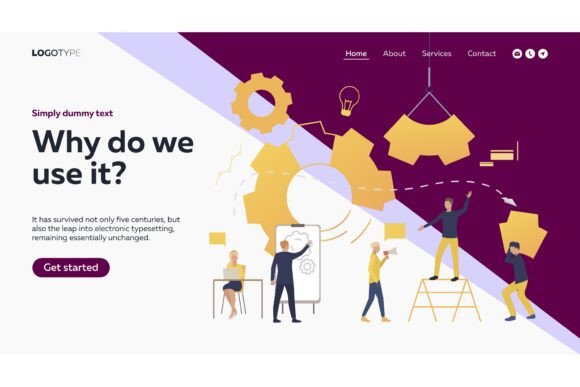
In the landscape of modern corporate communication, visual assets serve as more than mere decoration; they function as strategic tools that define brand identity and clarify complex narratives. The concept known as Businesspeople Constructing Mechanism represents a specific genre of vector illustration designed to capture the intricate nature of teamwork. This graphic depicts business professionals at work, meticulously assembling a mechanical system adorned with gears, sketches, and technical elements. While it appears as a static image, its purpose is dynamic. It translates the abstract nuances of collaborative effort into a striking flat vector representation, embodying the true spirit of corporate synergy and strategic coordination. For professionals ranging from startup founders to enterprise marketers, understanding how to leverage this specific visual metaphor is essential for creating compelling digital experiences.
The Anatomy of Collaborative Visuals
To utilize Businesspeople Constructing Mechanism effectively, one must first understand what it represents within a broader design process. Unlike generic stock photos of people shaking hands or sitting in conference rooms, this illustration focuses on the act of creation and assembly. The inclusion of gears suggests movement, interconnectivity, and the precise alignment of different roles. The sketches imply planning and ideation, while the figures themselves represent the human element driving the machinery forward. This artwork takes the nuances of collaborative effort and translates them into a visual language that resonates with audiences who value structure and results.
This graphic is not just a design; it is a compelling narrative underlining your business narrative or team's dedication to shared goals. It moves beyond simple aesthetics to become a portrayal of shared objectives and collective progress. When integrated into a website or marketing material, it signals to the viewer that the organization operates like a well-oiled machine, where every component has a purpose and every individual contributes to the final output. This distinction is crucial for businesses aiming to project competence, reliability, and a forward-thinking approach to problem-solving.
Strategic Placement in the Project Lifecycle
The versatility of Businesspeople Constructing Mechanism allows it to be deployed at various stages of a project lifecycle, from initial planning to final presentation. Its application depends heavily on the message you wish to convey at each phase.
- Pre-Project Phase: During the planning stage, this illustration can be used in pitch decks or proposal documents to visualize the proposed workflow. It helps stakeholders understand that the project will be built on a foundation of structured collaboration rather than ad-hoc efforts. It sets the expectation of a systematic approach before a single line of code is written or a product is manufactured.
- During Execution: As a project moves into execution, the graphic serves as an excellent asset for internal dashboards or status update pages. It reinforces the ongoing nature of the work, reminding the team that they are actively constructing the solution together. It acts as a visual anchor for progress reports, symbolizing the turning of gears and the steady advancement toward milestones.
- Post-Project and Marketing: Once a project is complete, this imagery transitions into a tool for case studies and success stories. It illustrates the "how" behind the "what," explaining to clients and customers that the successful outcome was the result of meticulous construction and teamwork. It is perfectly suitable for business-themed banners or lending an engaging visual appeal to landing web pages dedicated to service offerings.
Integration with Digital Workflows
For designers and content creators, integrating Businesspeople Constructing Mechanism into existing workflows requires attention to compatibility and usability. As a flat vector representation, the file format is typically scalable without loss of quality, making it ideal for responsive web design. Whether displayed on a mobile device or a large desktop monitor, the details of the gears and sketches remain crisp and legible.
When working with other design tools, such as Adobe Illustrator, Figma, or Canva, this asset interacts seamlessly with standard color palettes and typography systems. Because it is often provided in editable formats, teams can adjust the colors of the business attire or the mechanical components to match their brand guidelines. This customization ensures consistency across all digital touchpoints. For instance, if a company uses a specific shade of blue for trust and stability, adjusting the vector elements to match creates a cohesive visual identity that strengthens brand recognition.
Furthermore, this graphic pairs well with other data visualization elements. In a dashboard environment, placing the illustration alongside charts showing team productivity or project timelines creates a narrative flow. The mechanism represents the engine, while the data represents the fuel and output. This combination provides a holistic view of operations, making complex metrics more digestible for non-technical stakeholders.
Optimizing for User Experience and Engagement
From a user experience (UX) perspective, the placement of Businesspeople Constructing Mechanism should be intentional. On a landing page, it often works best above the fold or near key call-to-action buttons. By positioning the image where users first encounter the content, you immediately establish the theme of partnership and construction. This visual cue reduces cognitive load by instantly communicating the value proposition: we build solutions together.
However, overuse can dilute the impact. It is important to balance this detailed illustration with whitespace and clear typography. The goal is to let the graphic breathe so that the viewer can appreciate the intricacies of the design. In email marketing campaigns, a smaller version of the graphic can serve as a header or a section divider, guiding the reader through the narrative without overwhelming the text. The key is to ensure that the visual supports the copy rather than competing with it.
Practical Implementation Tips for Teams
Implementing this type of specialized asset into a business routine involves more than just downloading a file. It requires a strategic approach to content creation and brand storytelling. Here are practical observations for maximizing the utility of Businesspeople Constructing Mechanism:
- Align with Brand Values: Before using the graphic, audit your brand values. Does your company prioritize precision, innovation, and teamwork? If so, this illustration is a perfect fit. If your brand is more about disruption or chaos, a different visual metaphor might be more appropriate. Consistency between visual assets and core values is vital for building trust.
- Contextualize the Narrative: Do not use the image in isolation. Accompany it with captions or headings that explicitly reference the "construction" aspect of your services. Use phrases like "Building Your Future," "Engineering Solutions," or "Assembling Success." This reinforces the connection between the visual and the textual message.
- Ensure Accessibility: While the graphic is visually rich, ensure that alt-text descriptions accurately describe the scene for screen readers. Mention the business professionals, the gears, and the act of construction. This ensures that the narrative of teamwork is accessible to all users, adhering to web accessibility standards.
- Maintain Quality Control: Regularly review how the graphic renders across different platforms. Check for color shifts, scaling issues, or compression artifacts. High-quality visuals reflect a commitment to excellence, whereas low-quality images can undermine the professional tone of the entire site.
Long-Term Value and Adaptability
The longevity of Businesspeople Constructing Mechanism lies in its adaptability. As business models evolve, the fundamental need for collaboration remains constant. The flat vector style is timeless, avoiding the dated look of overly realistic 3D renders or trendy skeuomorphic designs that quickly fall out of favor. This makes it a cost-effective investment for long-term branding strategies.
Moreover, the conceptual depth of the illustration allows it to grow with the organization. A startup might use it to show potential investors how they plan to scale their operations. A mature corporation might use it to highlight its ability to manage complex, multi-departmental projects. The versatility of the imagery ensures that it remains relevant regardless of the company's size or stage of growth.
Ultimately, this artwork is much more than an illustration; it is a portrayal of shared objectives and collective progress. It captures the essence of teamwork in its finest form, making it an ideal choice for those seeking to convey the power of collaboration. By thoughtfully integrating Businesspeople Constructing Mechanism into your digital ecosystem, you create a visual language that speaks directly to the aspirations of your audience, reinforcing the idea that great things are built together.