Unlocking Digital Creativity: The Rise of Online Painting Education
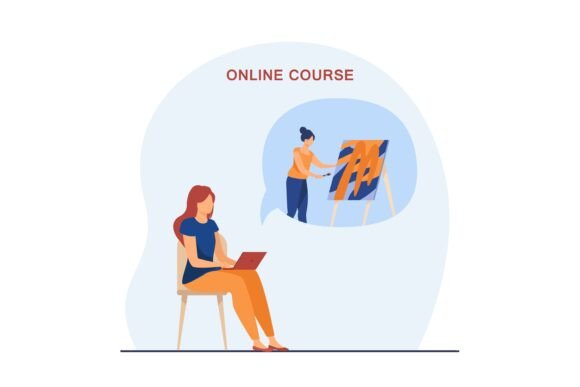
The landscape of artistic education has shifted dramatically in the last decade. Gone are the days when aspiring painters had to commute hours to a physical studio or wait for semester schedules to align with their lives. Today, creativity is just a click away, and nowhere is this more evident than in the visual representation of a Woman Watching Online Painting Course on Laptop. This image is not merely a stock graphic; it is a symbol of a broader cultural movement where traditional art meets modern technology. It captures a moment of focused learning, illustrating how digital platforms have democratized access to high-quality artistic instruction.
When we look at the concept of a woman engrossed in an online painting course, we see the fusion of two powerful worlds: the tactile, expressive nature of painting and the structured, accessible realm of e-learning. This intersection is reshaping how people approach skill acquisition, allowing individuals to cultivate their aesthetic appeal from the comfort of their own homes. Whether you are a complete beginner looking to pick up a brush for the first time or a seasoned artist seeking to refine your technique, the digital classroom offers a flexible, personalized path to mastery.
The Visual Language of Modern Learning
Consider the imagery often used to promote these courses: a sleek laptop sitting open on a desk, surrounded by the tools of the trade—brushes, palettes, and perhaps a half-finished canvas. This specific visual narrative, exemplified by the Woman Watching Online Painting Course on Laptop graphic, communicates a story of immersion. It suggests that learning is no longer a passive activity but an active, engaging journey. The flat vector style of such illustrations strips away unnecessary clutter, focusing the viewer's attention on the core action: the transfer of knowledge through a screen.
This visual metaphor serves a practical purpose in marketing and design as well. For website designers and content creators, using an illustration that depicts a learner deeply engaged in digital art education instantly conveys the value proposition of the service. It tells potential students, "You can do this too." It bridges the gap between the abstract idea of "learning to paint" and the concrete reality of sitting down with a device and starting a lesson. The blend of traditional art elements with modern tech hardware creates a harmonious aesthetic that appeals to a wide demographic, from hobbyists to professionals.
Why E-Learning is the New Studio
The primary driver behind the surge in online painting courses is flexibility. In a traditional setting, your progress is often dictated by the pace of the class or the availability of the instructor. With online learning, you control the timeline. You can pause a video to mix colors, rewind a complex stroke demonstration, or fast-forward through theory if you already grasp the concepts. This self-paced approach is particularly beneficial for adults juggling careers, families, and other responsibilities.
Furthermore, the accessibility of these courses means that geography is no longer a barrier. A student living in a remote village can access the same high-definition instruction as someone in a major art hub like Paris or New York. The Woman Watching Online Painting Course on Laptop scenario represents this global connectivity. It highlights how a single internet connection can unlock a world of mentorship, critique, and community support that was previously reserved for elite institutions.
Key Features of Effective Digital Art Courses
Not all online courses are created equal. When evaluating a platform or a specific painting course, there are several critical factors to consider. A high-quality course should offer more than just a series of videos; it needs to provide a comprehensive learning ecosystem.
- High-Quality Video Production: Clarity is paramount. Students need to see brush strokes, color mixing ratios, and texture application in high definition. Blurry footage can lead to frustration and poor results.
- Structured Curriculum: A logical progression from basic principles to advanced techniques ensures that learners build a solid foundation before attempting complex projects.
- Interactive Community: The ability to share work, receive feedback from peers, and interact with instructors fosters a sense of belonging and accountability.
- Diverse Mediums: While some courses focus solely on oil or acrylics, the best platforms often cover watercolors, gouache, and even digital painting, catering to various interests.
These features transform the solitary act of watching a screen into a dynamic educational experience. The Woman Watching Online Painting Course on Laptop graphic often implies this depth of engagement. It suggests that the user is not just passively consuming content but actively participating in a creative dialogue.
Integrating Art into Your Daily Workflow
Incorporating an online painting course into your lifestyle requires a shift in mindset. It is about finding pockets of time in your day dedicated to creation. Many successful artists treat their practice sessions like appointments, blocking out specific times on their calendars to study and create. The portability of the laptop makes this easier; you can set up your station in a quiet corner of the home office, a local coffee shop, or even a park bench (weather permitting).
Moreover, the digital nature of the instruction allows for seamless integration with other creative workflows. If you are a graphic designer, illustrator, or web developer, learning traditional painting techniques can significantly enhance your digital output. Understanding light, shadow, and color theory through a painting lens adds a layer of sophistication to digital designs. This cross-pollination of skills is a key benefit of the modern e-learning model.
The Psychology of Creative Growth
Beyond the technical skills, engaging in an online painting course offers profound psychological benefits. In a world dominated by screens and data, the act of creating something tangible provides a necessary counterbalance. It encourages mindfulness, reduces stress, and boosts cognitive function. The process of watching a tutorial and then attempting to replicate or adapt the techniques forces the brain to engage in problem-solving and fine motor coordination.
The image of a woman focused on her laptop while learning to paint encapsulates this state of flow. It is a moment of intellectual exploration where the outside world fades away, leaving only the task at hand. This deep focus is increasingly rare and valuable. By committing to an online course, individuals are investing in their mental well-being as much as their artistic portfolio.
Choosing the Right Path for Your Goals
Before diving into a new course, it is essential to define your objectives. Are you looking to paint for relaxation? Do you want to turn your hobby into a career? Or perhaps you are an educator looking to integrate new teaching methods into your curriculum? Your goals will dictate the type of course you choose.
If your aim is professional development, look for courses that offer certification, detailed critiques, and industry insights. For personal enrichment, a more relaxed, project-based approach might be preferable. The beauty of the online format is that you can sample different styles and instructors without a long-term commitment. Many platforms offer free trials or introductory modules, allowing you to test the waters before investing fully.
Designing for Inspiration: The Role of Visuals
The importance of strong visuals in promoting these courses cannot be overstated. As mentioned earlier, the Woman Watching Online Painting Course on Laptop illustration serves as a powerful tool for branding and communication. It instantly sets the tone for the learning experience. When designing landing pages, banners, or social media posts, utilizing such imagery helps to humanize the brand and connect emotionally with the audience.
Designers should aim for compositions that feel authentic yet aspirational. The inclusion of art supplies alongside the technology reinforces the message that this is a hands-on, creative endeavor. The flat vector style is particularly effective because it is clean, modern, and easily scalable across different devices. Whether viewed on a mobile phone or a large desktop monitor, the message remains clear: creativity is accessible, and the journey starts now.
Future Trends in Digital Art Education
As technology continues to evolve, so too will the methods of teaching art. We are already seeing the integration of augmented reality (AR) and virtual reality (VR) into painting courses, offering immersive 3D environments for students to explore. Artificial intelligence may soon provide personalized feedback on brushwork and composition in real-time. However, despite these advancements, the core essence of the learning experience remains unchanged: the desire to create, to learn, and to express oneself.
The fundamental appeal of the Woman Watching Online Painting Course on Laptop concept lies in its simplicity and universality. It speaks to a universal human desire for growth and expression. As we move forward, the lines between physical and digital art will continue to blur, creating exciting new opportunities for artists everywhere. The future of art education is bright, flexible, and undeniably digital, inviting everyone to pick up a brush and start their own masterpiece.